I conduct this research independently and fund it myself. If you find my work interesting, you can support the project financially. You can copy the bank card number simply by clicking COPY. Your support will help the project grow! Thank you for your support!
From Counting to Writing: The Evolution of Record-Keeping Systems in Mesopotamia
📅 26.10.2026 15:14
From Blade to Letter: Historical Context and the Unresolved Mysteries of Ancient Writing
The origin of writing is one of humanity’s greatest intellectual achievements. However, its beginnings were not associated with art or religious texts, but arose from the practical necessity of economic accounting.
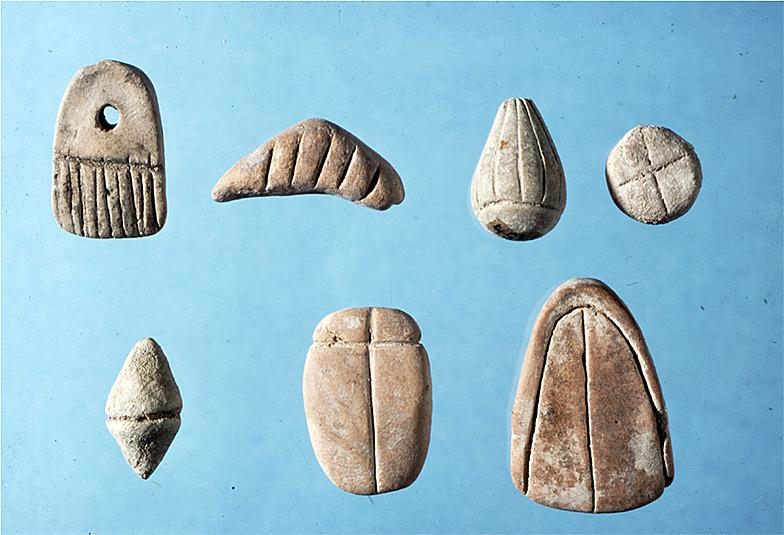
Early Sumerian logogramsArchaeological evidence indicates that the history of writing began not with a pen or stylus, but with simple clay objects known as counting tokens. Dating to approximately 8000–3000 BCE, these three-dimensional objects took the form of cones, spheres, discs, and other geometric shapes, each of which had a specific meaning: for example, a cone might represent a measure of grain, while an oval-shaped object might represent a vessel containing oil. This primitive yet effective method made it possible to keep records of quantities of goods and livestock essential to the management of early agricultural communities. Information was conveyed through a one-to-one correspondence between a physical object and its numerical equivalent, making the system understandable to all participants in trade, regardless of their native language.
📅 26.10.2026 15:20
```
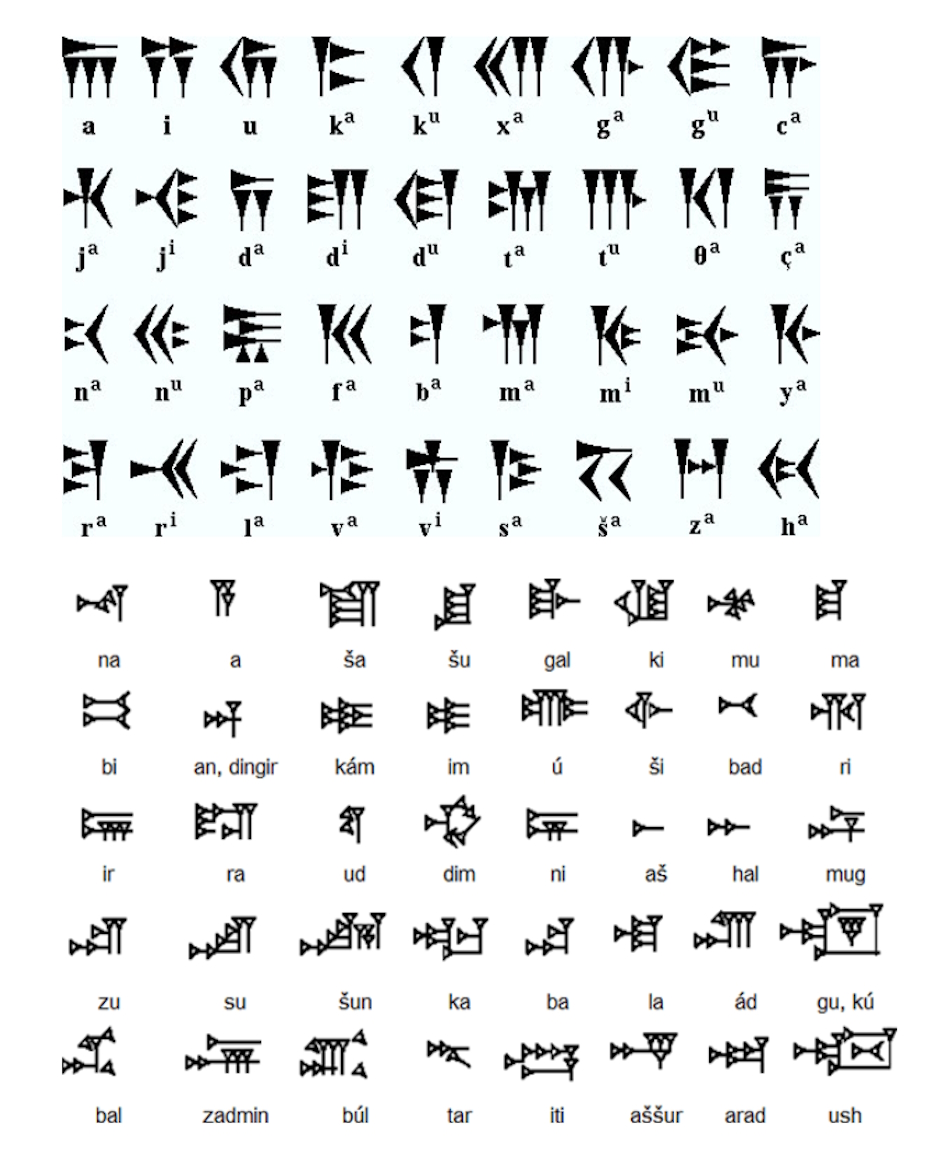
For generations of historians and archaeologists, cuneiform remained an unsolved mystery, a “forgotten language of the world.” For centuries, it adorned ancient temples and palaces, yet its contents remained unknown. The problem was that cuneiform was not a single language or writing system, but rather a versatile writing instrument used to record numerous different languages, including Akkadian, Sumerian, Elamite, Hittite, and many others. Without a bilingual text comparable to the Rosetta Stone, which enabled the decipherment of Egyptian hieroglyphs, attempts to read these signs had yielded no results for centuries. The first breakthrough came in 1802 through the work of Georg Friedrich Grotefend, a German officer and self-taught scholar. By analyzing old copies of Persian inscriptions from the walls of Persepolis, Grotefend made an insightful observation: he proposed that the Old Persian form of cuneiform was not a hieroglyphic system in which each sign represented an entire word, but rather an alphabetic system in which each sign corresponded to a particular letter.
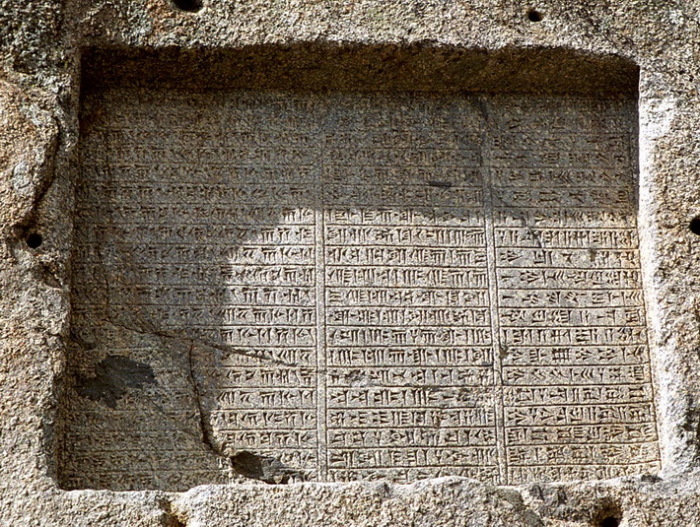
The Ugaritic alphabet—the earliest known alphabetic writing system Based on this hypothesis, he compared recurring sign patterns in lengthy lists of kings with information preserved in Greek historical chronicles and correctly identified several signs representing the names of rulers such as Darius and his son Xerxes. Although Grotefend made some errors in the details and deciphered only a portion of the signs, his work laid the foundation for future research and demonstrated for the first time that cuneiform had a phonetic dimension. However, the real key to deciphering the entire cuneiform system was a monumental three-column inscription carved into a cliff on Mount Behistun in present-day Iran. This inscription was created between [dates missing in the original] BCE by the Persian king Darius I the Great. It presented the same account of his accession to the throne and the suppression of rebellions in three languages: Old Persian, Elamite, and Babylonian, a variety of Akkadian. Like the Rosetta Stone, this trilingual text provided scholars with a unique opportunity for comparative analysis and served as an ideal “key” to deciphering all three languages written in cuneiform. The English military translator and officer Henry Rawlinson played a central role in exploiting this key. Between 1835 and 1847, he undertook a remarkable feat, climbing the dangerous cliff on his own and producing an accurate copy of the inscription, including its most inaccessible upper sections. These copies, sent to Europe, became a principal resource for subsequent research. With the Old Persian text deciphered by Grotefend available as a reliable starting point, scholars gained a firm foundation for further investigation. Working independently of other researchers, Rawlinson applied his approach to deciphering the Babylonian Akkadian text. He began by identifying proper names and titles already known from the Bible and classical authors, gradually establishing correspondences between cuneiform signs and their phonetic values in Akkadian. His work, published in [year missing in the original], marked the first major step toward decoding this ancient system. At the same time, Edward Hincks, an Irish clergyman, was also studying cuneiform. Independently of Rawlinson, he concluded that Old Persian cuneiform was syllabic rather than alphabetic, and by [year missing in the original] he had mastered Akkadian signs. Shortly after Rawlinson presented his work, Hincks used the information obtained to begin investigating the Elamite text, significantly accelerating progress in the field of cuneiform studies. The decipherment process was far from smooth; scholars frequently disagreed, proposed conflicting theories, and made mistakes, leading to public disputes, particularly between Rawlinson and Hincks.
```
The Mystery of Untouched Archives: The Paradox of Cuneiform Preservation
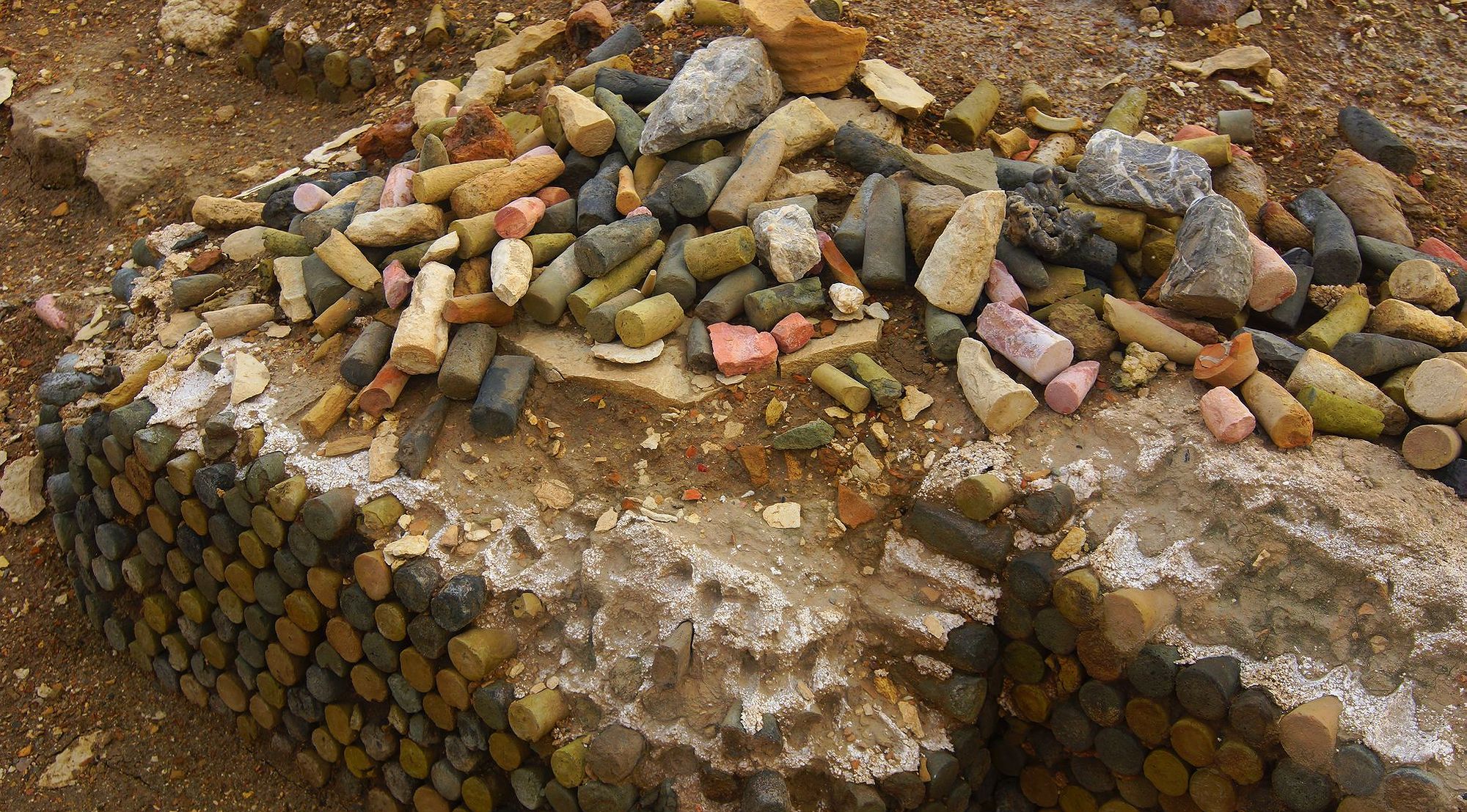
One of the most striking paradoxes encountered by archaeologists in Mesopotamia is the large-scale preservation of clay tablets in their original condition. Clay was not only the medium on which one of the world's greatest writing systems was created, but also one of the region's most valuable resources, where stone and timber were scarce. Any clay tablet, even the smallest one, could easily be fired in a kiln and recycled into a new brick or clay object. It would therefore be reasonable to assume that whenever a city was captured by an enemy, its buildings burned and its archives were either destroyed by fire or emptied, with the tablets removed and recycled as raw material. Yet the archaeological evidence from Akkadian civilization presents a very different picture. In cities that were suddenly abandoned, archives have been discovered intact. In some cases, tablets were found stacked in towers; in others, they had fallen directly from shelves, as though their owners had fled in haste without having time to take anything with them.
This fact poses a significant challenge for archaeologists and raises an important question: why? Examples from other ancient cities, such as Ebla (c. 2400 BCE) and Mari (c. 1761 BCE), demonstrate that the accidental preservation of archives was possible. At Ebla, approximately [number missing in the original] tablets were discovered, apparently buried under earth during the city's destruction. At Mari, when Hammurabi's troops plundered and burned the palace of King Zimri-Lim, the defenders who perished had attempted to conceal the most valuable documents, particularly diplomatic correspondence, in special baskets. However, the administrative documents left behind were gathered by the conquerors into new baskets. In both cases, preservation resulted from a combination of chance and specific events, such as fire, flooding, or deliberate human action. Yet the scale and nature of the finds in Akkadian and Assyrian cities are different. Here, archaeologists have uncovered not merely one or two archives, but entire libraries containing tens of thousands of tablets. A famous example is the library of King Ashurbanipal at Nineveh, which contained approximately 30,000 items. These tablets were not simply abandoned: they were kept in purpose-designated rooms and arranged in chronological or thematic order. This suggests that the archives did not merely happen to survive intact, but were left in a condition that made them ready for continued use.
The most plausible explanation for this unusual phenomenon is the hypothesis of a sudden, large-scale catastrophe. If the population had gradually abandoned their homes or left after a prolonged siege, they would almost certainly have taken their belongings with them and recycled the clay. A sudden event that forced people to flee without giving them time to gather their possessions could explain this paradox. Several explanations for such a catastrophe have been proposed. One hypothesis, attracting increasing attention, suggests that a large meteorite or asteroid struck the Mesopotamian region during that period. Although direct evidence of such an event is currently lacking, the possibility itself warrants consideration as a potential factor in the preservation of the archives. Another, more plausible and better-documented hypothesis concerns ecological collapse. Research into Holocene shifts in the courses of the Tigris and Euphrates rivers indicates that such changes did indeed occur. In one well-known case, at the city of Lagash, a shift in the course of a major irrigation canal led to an abrupt economic collapse, the failure of the water supply system, and, consequently, the complete abandonment of the city. A similar event on a much larger scale could have caused not only famine and chaos, but also a rapid and mass exodus from the cities of Akkadian civilization, leaving their archives untouched. If these hypotheses are correct, we are looking at an invaluable archive that was effectively “preserved” by catastrophe. What we see is not the result of slow evolution or gradual oblivion, but an instantaneous snapshot of an entire system at the height of its development, captured at the moment of a sudden disruption. This may help explain why so many well-preserved texts from this period have survived: an event occurred that brought the system to an abrupt halt. These archives represent more than a collection of documents; they are a kind of “library of the universe,” preserving knowledge, technologies, religious beliefs, and the everyday lives of the people who lived during that era. They offer us a unique opportunity to look into the past in a way that is rarely possible with other civilizations of the ancient world. This form of “preservation” makes the Akkadian archives among the most valuable and enigmatic sources ever uncovered by archaeologists. They hold many secrets, and each tablet poses a mysterious question that remains to be answered.
The Evolution of Writing
📅 26.10.2026 15:39
Stage of Evolution
Description
Example
Counting Tokens (c. 8000–3000 BCE)
Three-dimensional clay objects, each representing a specific unit of a commodity (livestock, grain).
A cone representing a measure of grain; a sphere representing sheep.
Token Impressions (c. 3500–3000 BCE)
Tokens were pressed into the surface of a clay envelope to verify its contents.
An impression of a cone on the outer surface of a clay envelope.
Pictograms (c. 3200–3000 BCE)
Representations of objects drawn on flat clay tablets for record-keeping.
A drawing of a cow representing livestock.
Cuneiform (c. 3200 BCE)
The transition to using a wedge-shaped stylus to impress signs rapidly into clay tablets.
The sign for the god An, composed of several wedges.
Voices from the Past: New Mysteries of Early Manuscripts
📅 26.10.2026 15:48
Although Akkadian clay tablets constitute the oldest and most extensive body of written sources, they are not the only evidence of early writing. In recent decades, archaeology has uncovered a number of remarkable finds that, despite belonging to different cultures and periods, share a common characteristic with ancient texts: they lack modern orthographic conventions and represent a kind of “linguistic artifact.” These discoveries, made in arid regions such as the Judean Desert and Yemen, include the Dead Sea Scrolls, the Birmingham Qur'an manuscript fragment, and the Sana'a palimpsest. Like cuneiform tablets, these manuscripts have survived in large part because of exceptionally dry climatic conditions that prevented their deterioration over the centuries. A central feature of these early manuscripts is their orthography. Most of them, particularly in their earliest textual layers, either lack diacritical marks entirely or employ them inconsistently. In Arabic, this means the absence of dots and other marks that distinguish consonants such as “s” and “z,” or “f” and “q.” In Hebrew, it means the absence of niqqud, the dots and strokes placed above and below letters to indicate vowel sounds. As a result, texts are written using a consonantal skeleton, while readers must supply the vowels based on linguistic context and reading tradition. This method, associated with abjad writing systems, was characteristic of many ancient Semitic languages, including Phoenician and Aramaic. In ancient Hebrew inscriptions, for example, certain consonant letters were commonly used to represent vowel sounds. The Dead Sea Scrolls, written primarily in Hebrew and Aramaic, employ a practice known as *plene spelling*, in which certain consonant letters (*matres lectionis*) indicate the presence of vowel sounds, making the text easier to read. These unusual orthographic features are not necessarily errors; rather, they reflect an early stage in the development of writing, when the system had not yet reached full standardization. The Birmingham Qur'an manuscript fragment, whose parchment has been radiocarbon-dated to an early period (between [dates missing in the original] CE), exhibits variations in word spelling, distinctive orthographic features, and non-standard verse divisions. These features have prompted scholarly discussion about the early transmission and standardization of the text. Similarly, the Sana'a palimpsest, a parchment manuscript whose original text was erased and overwritten with a standard Qur'anic text, preserves numerous variants in its lower layer that differ from the standard text. For example, the lower text may contain different surah orders, substitutions of words with synonyms, additions or omissions of entire phrases, and orthographic features such as the omission of long vowels. The word *qāla* (“he said”), for instance, might be written as *ql*, a consonantal spelling that, in a different context, could be associated with *qul* (“say!”). Such variations indicate that multiple textual traditions existed during the seventh and eighth centuries, and that the standardization of the text was a complex historical process involving numerous communities. Thus, these early manuscripts, like cuneiform archives, preserve many mysteries related not only to their contents but also to their very existence and physical form. They provide direct evidence of how people used writing at a time when it was developing into an instrument of broader communication. The absence of standardized spelling and punctuation created certain difficulties for interpretation, but it also allowed for a range of textual variants and readings. The study of these texts demonstrates that the problem of reading ancient manuscripts is not a new one. It is characteristic of early written sources across different cultures, regardless of the materials on which they were produced. This highlights the complexity of the task facing historians and linguists who seek to reconstruct the precise meaning of ancient documents. Every discovery, whether a clay tablet from Mesopotamia or a parchment fragment from the desert, represents another piece of a puzzle that helps us better understand how humanity learned to preserve and transmit knowledge from one generation to the next.
By examining the “father and son” sequence in the inscriptions, Grotefend compared the number and length of the signs with the names of Persian rulers known from ancient historical records. He determined that the text referred to Xerxes and his father, Darius, and that Darius’s father, Hystaspes, had not been a king, since the title “king” did not follow his name.
📅 26.10.2026 18:12
📅 26.10.2026 18:14
However, it was their combined efforts and the continuous comparison of their results that ultimately led to success. The culmination of this scientific triumph was a famous experiment conducted in May [year missing in the original] in London. At a meeting of the Royal Asiatic Society, four leading specialists in cuneiform—Edward Hincks, Henry Rawlinson, Julius Oppert, and even the photographer William Fox Talbot—were each given the same previously undeciphered inscription, dating to the reign of the Assyrian king Tiglath-Pileser I. Each received a separate copy and was asked to prepare a translation. Some time later, when all the translations were ready, they were read aloud. To everyone's surprise and delight, the translations proved to be virtually identical, describing the same account of the king's military expedition into the mountains. This experiment provided compelling evidence that scholars had found the correct key to understanding cuneiform. The triumph of science was complete: a forgotten language that had remained silent for millennia had finally been deciphered. This breakthrough opened up unprecedented opportunities for the study of the ancient Near East. Researchers could now read firsthand laws, letters, literary works, scientific texts, and religious hymns written by the ancient Sumerians, Akkadians, Babylonians, and Assyrians themselves. We were able to hear the voices of people who lived long before Homer was born and discover their thoughts, fears, hopes, and knowledge. The decipherment of cuneiform transformed Mesopotamia from a distant land known primarily through biblical legends into one of the most extensively documented civilizations of the ancient world.
📅 26.10.2026 18:17
As social structures became more complex and trade volumes increased, this token-based system encountered practical difficulties.
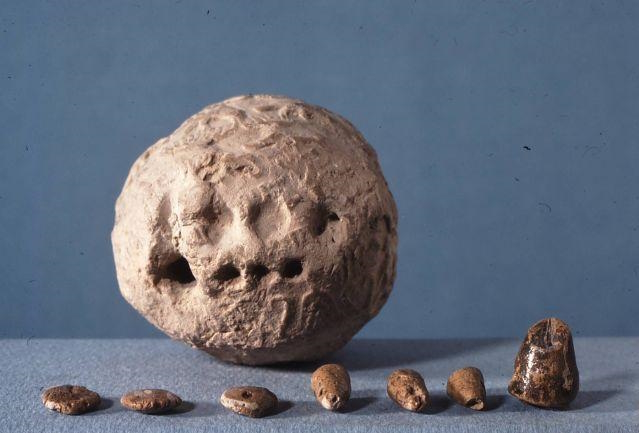
Counting tokensTo verify the contents of counting tokens, they were placed inside hollow clay envelopes, which were then sealed. To check the contents quickly without breaking the seal, resourceful administrators began pressing impressions of the tokens into the surface of the clay envelopes. This marked a decisive step in the development of writing. The two-dimensional impressions on the surface became a kind of “visual record,” replacing the physical objects enclosed within. Over time, this practice evolved further: instead of placing tokens inside an envelope, people began making impressions of them directly on the flat surface of a clay tablet.
Clay container for storing tokens — bullaThus, the first pictograms emerged: simplified drawings depicting objects such as animals, people, resources, and even deities. These early signs, found on tablets from the cities of Uruk and Jemdet Nasr dating to approximately 3500–3100 BCE, were used to keep accounts and compile inventories for temple institutions. For example, a tablet might contain a series of images, each corresponding to a particular type of ration, such as grain, fish, or livestock. However, the most significant intellectual revolution lay not in the appearance of the images themselves, but in how they were interpreted. The pictographic system was well suited to representing concrete objects—for example, a drawing of an eye could signify “eye”—but it could not readily record abstract concepts or proper names consisting of several syllables. A breakthrough came with the rebus principle. Under this method, a sign could be used not only for its literal meaning but also as a phonetic symbol. For example, if a tablet needed to record the name of a person whose name sounded like “An-Gives-Life,” a combination of signs might be used: a star, which also served as the sign for the god An, and an arrow whose name in the local language sounded like the word for “life.” Signs used to represent sounds became known as phonograms, and their use enabled writing to move beyond recording objects to representing the sounds of speech. This transition from logograms (signs representing words) to phonograms laid the foundation for a fully developed writing system capable of recording any spoken language. The emergence of phonograms fundamentally changed the nature of writing. A system based on pictograms was relatively straightforward, but its expressive capabilities were limited. With the introduction of a phonetic component, the range of signs expanded considerably, as different sound combinations required their own representations. Moreover, a single sign could have several functions: it could serve as a logogram, a phonogram representing one or more sounds, or a purely phonetic sign without an independent lexical meaning. As a result, the system became increasingly complex and polyvalent. To accelerate writing and simplify the shapes of signs, Sumerian scribes began experimenting with their technique. Instead of simply drawing figures, they pressed the tip of a stylus into a moist clay tablet, creating a series of wedge-shaped impressions. This new style, known as “cuneiform” (from the Latin *cuneus*, meaning “wedge”), made writing faster and more standardized. Although some early signs still resembled their original pictographic forms, most evolved into complex arrangements of wedges and lines. This new, abstract system, which emerged in Uruk around [date missing in the original] BCE, became the basis of a writing tradition used by many peoples of Mesopotamia for nearly three millennia. This evolution from simple accounting practices to complex cuneiform was a long and continuous process driven by practical needs. The Sumerians, as the earliest users of this system, laid its foundations, but cuneiform soon spread to other peoples of the region. The Akkadians, who adopted and adapted Sumerian cultural traditions, modified cuneiform to suit their own Semitic language. Later civilizations, including the Babylonians and Assyrians, continued this tradition, using cuneiform for a vast range of texts: from economic contracts and laws, such as the famous Code of Hammurabi, to literary works such as the Epic of Gilgamesh, as well as medical and astronomical texts. Each civilization contributed to the development and increasing complexity of the system. For example, during the Akkadian period (approximately 2500–2000 BCE), signs became increasingly abstract, often consisting of five or ten wedges. The system remained mixed, employing both logograms (signs representing whole words) and phonograms (signs representing syllables or sounds), with the total number of signs reaching several hundred. This complex, multilayered nature of cuneiform meant that mastery of the system was largely restricted to a limited group of professionals: scribes who underwent years of training and formed part of the elite of ancient states. It was precisely this complexity that made the subsequent transition to a simpler and more versatile writing system—the alphabet—such a significant event in the history of human culture.