



PaNi method
📑
📚
PaNi · Research Laboratory
The Researcher's Manifesto
Dear reader, if you have come here looking for ready-made dogmas, "final interpretations," or sacred infallibility, you have come to the wrong place. You will find none of that here.
What you will see on this website is not a final result. It is a process.
This website is not a library of answers. It is an invitation to participate in an algorithm of inquiry. We build an architecture of thought, element by element, hypothesis by hypothesis.
Do not be deceived: the path is not easy. Simplicity belongs only to Absolute Consciousness.
Our task is not to possess the truth, but to become part of the process through which it is revealed. Become co-architects of this journey.
You are observing a living research process in real time.
What is research according to the PaNi method?
It is not a collection of quotations. It is an engineering cycle:
- Formulating a hypothesis. Based on root logic, the physical properties of materials, and cognitive semantics.
- Rigorous testing. Comparing the hypothesis with evidence from archaeology, linguistics, and the technology of writing.
- Relentless elimination. Discarding everything that does not work, even if it was my favorite idea just yesterday.
- A new hypothesis. Developing a more precise model based on the results of testing.
Why don't I provide "final results"?
Because ancient texts are complex systems. Any claim to a "final answer" in the humanities is either a falsehood or an attempt to halt the process of discovery.
I would rather be honest about the evolution of my thinking than pretend to certainty in a static position.
What you will NOT find here
- Religious sermons.
- Abstract mysticism without a physical basis.
- Claims that cannot be tested or independently reproduced.
- The illusion that the work is complete.
What you WILL find here
- Working hypotheses about clay, tools (Rasul/Qalam), and modular writing systems.
- Analysis of ancient texts as "source code," rather than sacred objects.
- Deconstruction of later contexts imposed on texts, and reconstruction of semantic relationships.
- Mistakes, corrections, and the evolution of ideas.
Warning
The materials are under active development. An article published today may be refined or disproved by tomorrow's evidence. This is not a bug. It is a feature.
If you are ready to think, test, and question things alongside me, welcome to the laboratory.
If all you want is to believe, please close this tab.
Kamal
Architect of the PaNi System
Şumer-akkStructural analysis. Huruf al-muqatta'at
Initial Graphemic Sequences: Preliminary Observations
Upon initial examination, these sequences should indeed raise questions. They recur in different chapters, occupy a strictly defined position—at the beginning of text blocks—and are often accompanied by constructions directly related to writing, recording, reading, and text.
Therefore, at the very first stage, a research question emerges: what function do these sequences perform, and why are they located precisely at the beginning of certain text blocks?
We will not yet move on to the interpretation of Y-S-W, the semantics of individual graphemes, or the evidence. First, we record the observable material.
1. List of Initial Sequences
Below are the initial sequences traditionally identified, together with their transcription. This is a list of textual observations, not a claim that all 29 cases constitute independent graphemic blocks.
Chapter | Sequence | Transcription |
2 | الم | Alif-Lām-Mīm |
3 | الم | Alif-Lām-Mīm |
7 | المص | Alif-Lām-Mīm-Ṣād |
10 | الر | Alif-Lām-Rā |
11 | الر | Alif-Lām-Rā |
12 | الر | Alif-Lām-Rā |
13 | المر | Alif-Lām-Mīm-Rā |
14 | الر | Alif-Lām-Rā |
15 | الر | Alif-Lām-Rā |
19 | كهيعص | Kāf-Hā-Yā-ʿAyn-Ṣād |
20 | طه | Ṭā-Hā |
26 | طسم | Ṭā-Sīn-Mīm |
27 | طس | Ṭā-Sīn |
28 | طسم | Ṭā-Sīn-Mīm |
29 | الم | Alif-Lām-Mīm |
30 | الم | Alif-Lām-Mīm |
31 | الم | Alif-Lām-Mīm |
32 | الم | Alif-Lām-Mīm |
36 | يس | Yā-Sīn |
38 | ص | Ṣād |
40 | حم | Ḥā-Mīm |
41 | حم | Ḥā-Mīm |
42 | حم عسق | Ḥā-Mīm / ʿAyn-Sīn-Qāf |
43 | حم | Ḥā-Mīm |
44 | حم | Ḥā-Mīm |
45 | حم | Ḥā-Mīm |
46 | حم | Ḥā-Mīm |
50 | ق | Qāf |
68 | ن | Nūn |
2. Preliminary Observations
Several features can be identified in the presented lines:
- The sequences occupy the initial position of the corresponding text blocks.
- Some sequences recur in several chapters.
- Both single graphemes and combinations of multiple graphemes are used.
- The main text follows them immediately.
- In a number of cases, the immediate textual context contains words and constructions associated with kitāb, āyāt, qurʾān, qalam, and sṭr.
These observations provide the starting point for further research: first, we record the placement and recurrence of the graphemes; then, we examine their function in context.
3. Stage II. Collection of Corpus Data
Objective of this stage: To establish what information the textual corpus itself provides when examining the initial graphemic sequences and the lines that immediately follow them, which may indicate the function of individual letters.
Below are the initial sequences and their textual context. We preserve the numbering, graphemic spelling, and the provided transcription.
2:1
الم
Transliteration: A-L-M
2:2
Thalika Al-K-T-B Lā Rayba Fīhi Hudan Lil-Al-Muttaqīn
3:1
الم
Transliteration: A-L-M
3:2
Al-Lahu Lā 'Ilāha 'Illā Huwa Al-Ĥayyu Al-Qayyūmu
3:3
Nazzala `alayka al-kitāba bilĤaqqi Muşaddiqāan Limā Bayna Yadayhi Wa 'Anzala At-Tawrāata Wa Al-'Injīla
7:1
المص
Transliteration: A-L-M-Ṣ
7:2
Kitābun 'Unzila 'Ilayka Falā Yakun Fī Şadrika Ĥarajun Minhu Litundhira Bihi Wa Dhikrá Lilmu'uminīna
7:3
Attabiū Mā 'Unzila 'Ilaykum Min Rabbikum Wa Lā Tattabiū Min Dūnihi 'Awliyā'a ۗ Qalīlāan Mā Tadhakkarūna
10:1
الر
Transliteration: A-L-R
10:1 — Continuation of the line
Tilka 'Āyātu Al-Kitābi Al-Ĥakīmi
10:2
'Akāna Lilnnāsi Ajabāan 'An 'Awĥaynā 'Ilá Rajulin Minhum 'An 'Andhiri An-Nāsa Wa Bashshiri Al-Ladhīna 'Āmanū 'Anna Lahum Qadama Şidqin Inda Rabbihim ۗ Qāla Al-Kāfirūna 'Inna Hādhā Lasāĥirun Mubīnun
11:1
الر
Transliteration: A-L-R
11:1 — Continuation of the line
Kitābun 'Uĥkimat 'Āyātuhu Thumma Fuşşilat Min Ladun Ĥakīmin Khabīrin
11:2
'Allā Ta`budū 'Illā Al-Laha ۚ 'Innanī Lakum Minhu Nadhīrun Wa Bashīrun
12:1
الر
Transliteration: A-L-R
12:1 — Continuation of the line
Tilka 'Āyātu Al-Kitābi Al-Mubīni
12:2
Innā 'Anzalnāhu Qur'ānāan Arabīyāan Laallakum Ta`qilūna
13:1
المر
Transliteration: A-L-M-R
13:2
Al-Lahu Al-Ladhī Rafaa As-Samāwāti Bighayri Amadin Tarawnahā ۖ Thumma Astawá Alá Al-Arshi ۖ Wa Sakhkhara Ash-Shamsa Wa Al-Qamara ۖ Kullun Yajrī Li'jalin Musammáan ۚ Yudabbiru Al-'Amra Yufaşşilu Al-'Āyāti La`allakum Biliqā'i Rabbikum Tūqinūna
14:1
الر
Transliteration: A-L-R
14:1 — Continuation of the line
Kitābun 'Anzalnāhu 'Ilayka Litukhrija An-Nāsa Mina Až-Žulumāti 'Ilá An-Nūr Bi'idhni Rabbihim 'Ilá Şirāţi Al-`Azīzi Al-Ĥamīdi
14:2
Al-Lahi Al-Ladhī Lahu Mā Fī As-Samāwāti Wa Mā Fī Al-'Arđi ۗ Wa Waylun Lilkāfirīna Min `Adhābin Shadīdin
15:1
الر
Transliteration: A-L-R
15:1 — Continuation of the line
Tilka 'Āyātu Al-Kitābi Wa Qur'ānin Mubīnin
15:2
Rubamā Yawaddu Al-Ladhīna Kafarū Law Kānū Muslimīna
19:1
كهيعص
Transliteration: K-H-Y-ʿ-Ṣ
19:2
Dhikru Raĥmati Rabbika `Abdahu Zakarīyā
20:1
طه
Transliteration: Ṭ-H
20:2
Mā 'Anzalnā `Alayka Al-Qur'āna Litashqá
26:1
طسم
Transliteration: Ṭ-S-M
26:2
Tilka 'Āyātu Al-Kitābi Al-Mubīni
27:1
طس
Transliteration: Ṭ-S
27:1 — Continuation of the line
Tilka 'Āyātu Al-Qur'āni Wa Kitābin Mubīnin
27:2
Hudáan Wa Bushrá Lilmu'uminīna
28:1
طسم
Transliteration: Ṭ-S-M
28:2
Tilka 'Āyātu Al-Kitābi Al-Mubīni
29:1
الم
Transliteration: A-L-M
29:2
'Aĥasiba An-Nāsu 'An Yutrakū 'An Yaqūlū 'Āmannā Wa Hum Lā Yuftanūna
30:1
الم
Transliteration: A-L-M
30:2
Ghulibati Ar-Rūmu
31:1
الم
Transliteration: A-L-M
31:2
Tilka 'Āyātu Al-Kitābi Al-Ĥakīmi
36:1
يس
Transliteration: Y-S
36:2
Wa Al-Qur'āni Al-Ĥakīmi
38:1
ص وَالْقُرْآنِ ذِي الذِّكْرِ
Transliteration: Ṣād Wa Al-Qur'āni Dhī Adh-Dhikr
40:1
حم
Transliteration: Ḥ-M
40:2
Tanzīlu Al-Kitābi Mina Al-Lahi Al-Azīzi Al-Alīmi
40:3
Ghāfiri Adh-Dhanbi Wa Qābili At-Tawbi Shadīdi Al-`Iqābi Dhī Aţ-Ţawli ۖ Lā 'Ilāha 'Illā Huwa ۖ 'Ilayhi Al-Maşīru
41:1
حم
Transliteration: Ḥ-M
41:2
Tanzīlun Mina Ar-Raĥmāni Ar-Raĥīmi
41:3
Kitābun Fuşşilat 'Āyātuhu Qur'ānāan Arabīyāan Liqawmin Yalamūna
42:1–2
42:1
حم
Transliteration: Ḥ-M
42:2
عسق
Transliteration: ʿ-A-S-Q
42:3
Kadhālika Yūĥī 'Ilayka Wa 'Ilá Al-Ladhīna Min Qablika Al-Lahu Al-`Azīzu Al-Ĥakīmu
42:4
Lahu Mā Fī As-Samāwāti Wa Mā Fī Al-'Arđi ۖ Wa Huwa Al-Alīyu Al-Ažīmu
43:1
حم
Transliteration: Ḥ-M
43:2
Wa Al-Kitābi Al-Mubīni
43:3
'Innā Jaalnāhu Qur'ānāan Arabīyāan Laallakum Taqilūna
43:4
Wa 'Innahu Fī 'Ummi Al-Kitābi Ladaynā La`alīyun Ĥakīmun
44:1
حم
Transliteration: Ḥ-M
44:2
Wa Al-Kitābi Al-Mubīni
44:3
'Innā 'Anzalnāhu Fī Laylatin Mubārakatin ۚ 'Innā Kunnā Mundhirīna
45:1
حم
Transliteration: Ḥ-M
45:2
Tanzīlu Al-Kitābi Mina Al-Lahi Al-`Azīzi Al-Ĥakīmi
46:1
حم
Transliteration: Ḥ-M
46:2
Tanzīlu Al-Kitābi Mina Al-Lahi Al-`Azīzi Al-Ĥakīmi
50:1
ق وَالْقُرْآنِ الْمَجِيدِ
Transliteration: Qāf Wa Al-Qur'āni Al-Majīdi
50:2
Bal Ajibū 'An Jā'ahum Mundhirun Minhum Faqāla Al-Kāfirūna Hādhā Shay'un Ajībun
50:3
'A'idhā Mitnā Wa Kunnā Turābāan ۖ Dhālika Rajun Baīdun
50:4
Qad Alimnā Mā Tanquşu Al-'Arđu Minhum ۖ Wa Indanā Kitābun Ĥafīžun
68:1
ن وَالْقَلَمِ وَمَا يَسْطُرُونَ
Transliteration: Nūn Wa Al-Qalami Wa Mā Yasţurūna
68:2
mā 'anta bini`mati rabbika bimajnūnin
Counts Based on the Provided Sample
We count line blocks containing the corresponding root, rather than the number of repetitions within a block.
Root element | Number of blocks |
K-T-B | 21 |
A-Y-Y (آيات and its forms) | 10 |
N-Z-L (أنزل، نزل، تنزيل and its forms) | 11 |
K-T-B together with A-Y-Y | 10 |
Summary:
- K-T-B occurs in 21 blocks.
- A-Y-Y occurs in 10 blocks.
- N-Z-L occurs in 11 blocks.
- K-T-B and A-Y-Y are jointly present in 10 blocks.
The count is based on the transcription you provided. Repetitions of the same root within one line are counted as a single block.
1. K-T-B — Blocks Containing the K-T-B Root
19 blocks
2. A-Y-Y — Blocks Containing the A-Y-Y Root
10 blocks
3. N-Z-L — Blocks Containing the N-Z-L Root
11 blocks
4. K-T-B Together with A-Y-Y
10 blocks
For sections 2–4, the chapter numbers from the original breakdown are needed: the final counts have been preserved in the available list, but the corresponding reference lists themselves are missing. I will not insert assumed chapter numbers.
5. The Construction “Tilka āyātu…” — “These Are āyāt…”
8 blocks
10:1, 12:1, 13:1, 15:1, 26:2, 27:1, 28:2 ,31:2K-T-B Does Not Necessarily Mean “Book”
When analyzing an ancient text, the modern concept of a book as a bound paper object should not automatically be transferred to K-T-B.
If we return to the earlier material context of writing, we should consider the root's original function: something applied to, fixed on, or recorded on a surface.
Under this interpretation, kitāb may refer not to a book in the modern sense, but to a fixed graphemic structure.
This substantially changes how we perceive constructions in which kitāb occurs alongside āyāt and initial graphemes.
K-T-B means “placed on a surface in a prescribed order”… and, incidentally, about order…
The root N-Z-L is no less important. It should be considered in terms of its structural function: placing elements in their designated positions, distributing them, and arranging them sequentially.
Various forms of this root occur in the text:
- anzala — placement / distribution;
- tanzīl — the process of placement;
- nuzzila and other forms — depending on the grammatical construction.
The juxtaposition of N-Z-L with K-T-B and āyāt is particularly noteworthy.
Chapter | Textual construction |
14:1 | Alif-Lām-Rā. Kitābun 'anzalnāhu 'ilayka… |
40:2 | Tanzīlu al-kitābi mina Allāhi… |
41:2–3 | Tanzīlun mina ar-Raḥmāni ar-Raḥīmi. Kitābun fuṣṣilat āyātuhu… |
45:2 | Tanzīlu al-kitābi mina Allāhi… |
46:2 | Tanzīlu al-kitābi mina Allāhi… |
In these constructions, N-Z-L occurs directly alongside kitāb or appears in a context describing its āyāt.
4. General Structural Relationship
When these observations are combined, a consistent picture emerges:
- Graphemic sequences are located at the beginning of the textual structure.
- The text then refers to āyāt—the elements or units of the structure under consideration.
- K-T-B denotes content fixed on a surface.
- N-Z-L describes the placement and distribution of elements in order.
Thus, Tilka āyātu… and the various forms of N-Z-L represent two particularly important directions for research: the first connects the initial graphemes with āyāt, while the second connects them with the process of placing and ordering textual material.
Main Thesis
The initial graphemes, āyāt, kitāb, and N-Z-L should be studied as interconnected elements of a single textual structure.
Rather than assuming the existence of “secret signs,” the text itself provides grounds for investigating graphemes, their fixation, and their order of placement directly through its own constructions.
Subsequent Stages of the Research
In the next stages of the work, we will publish and examine all the presented text blocks sequentially as the research progresses.
It is important to clarify that these blocks have already been studied as part of the research conducted. Their subsequent presentation on the website does not mean that the analysis is beginning anew. Rather, it involves systematizing, preparing, and publishing research that has already been completed.
The publication of each block requires certain technical and material resources: preparing the data, structuring the corpus, formatting the pages, and integrating the materials into the website's research system.
Therefore, publication will proceed gradually, as the necessary resources become available.
Our goal is not simply to post texts, but to create an accessible research environment in which each block can be studied within the context of the overall structure and compared with other corpus materials.
Reversive Distortion
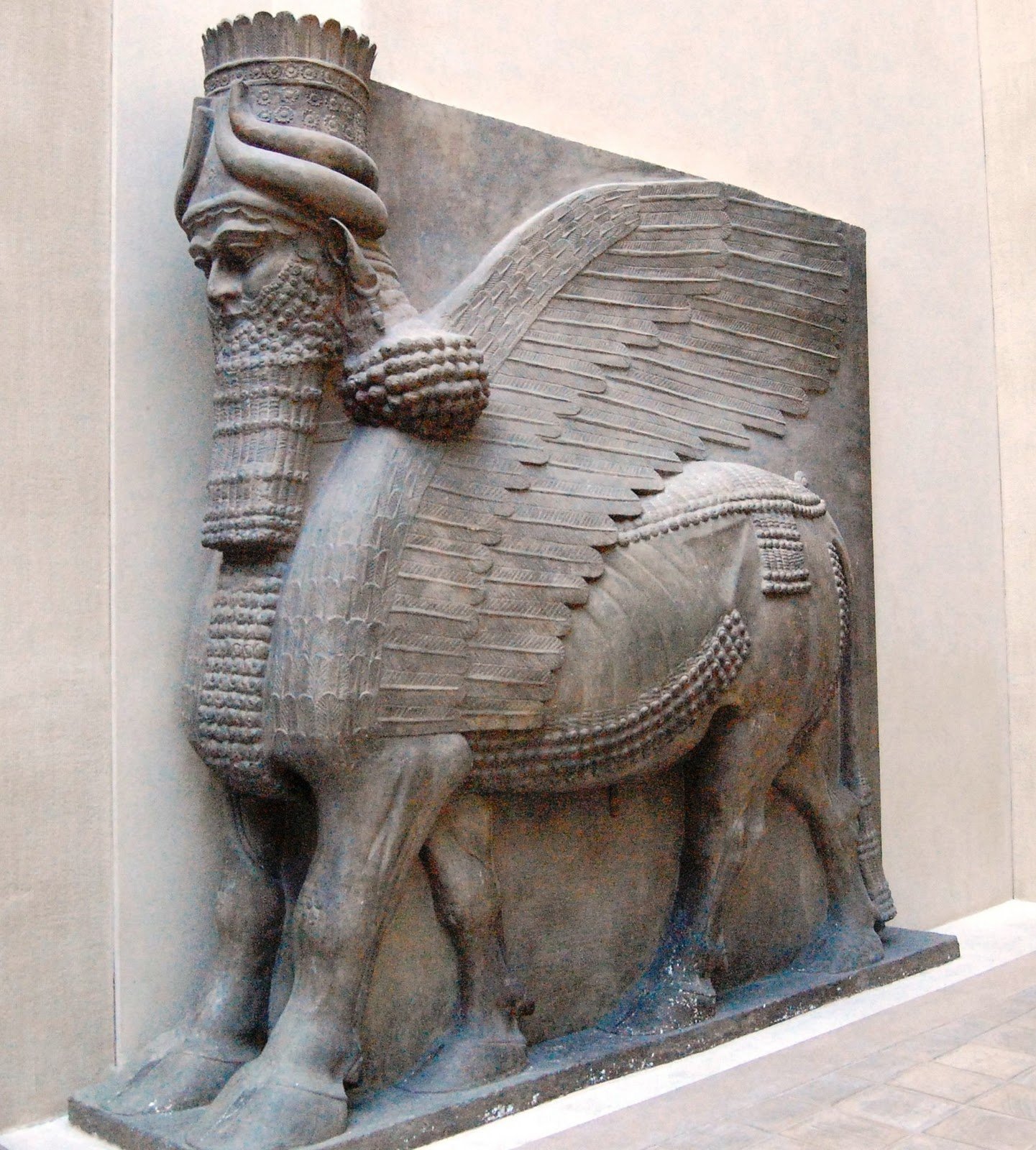
Why, despite thousands of years having passed, do we still accept the word dingir as meaning “god”? Why, as soon as we see the depiction of a winged being, do we immediately exclaim, “Angels!”? Perhaps we are not reading the ancient world at all, but rather our own reflection in a distorted mirror?
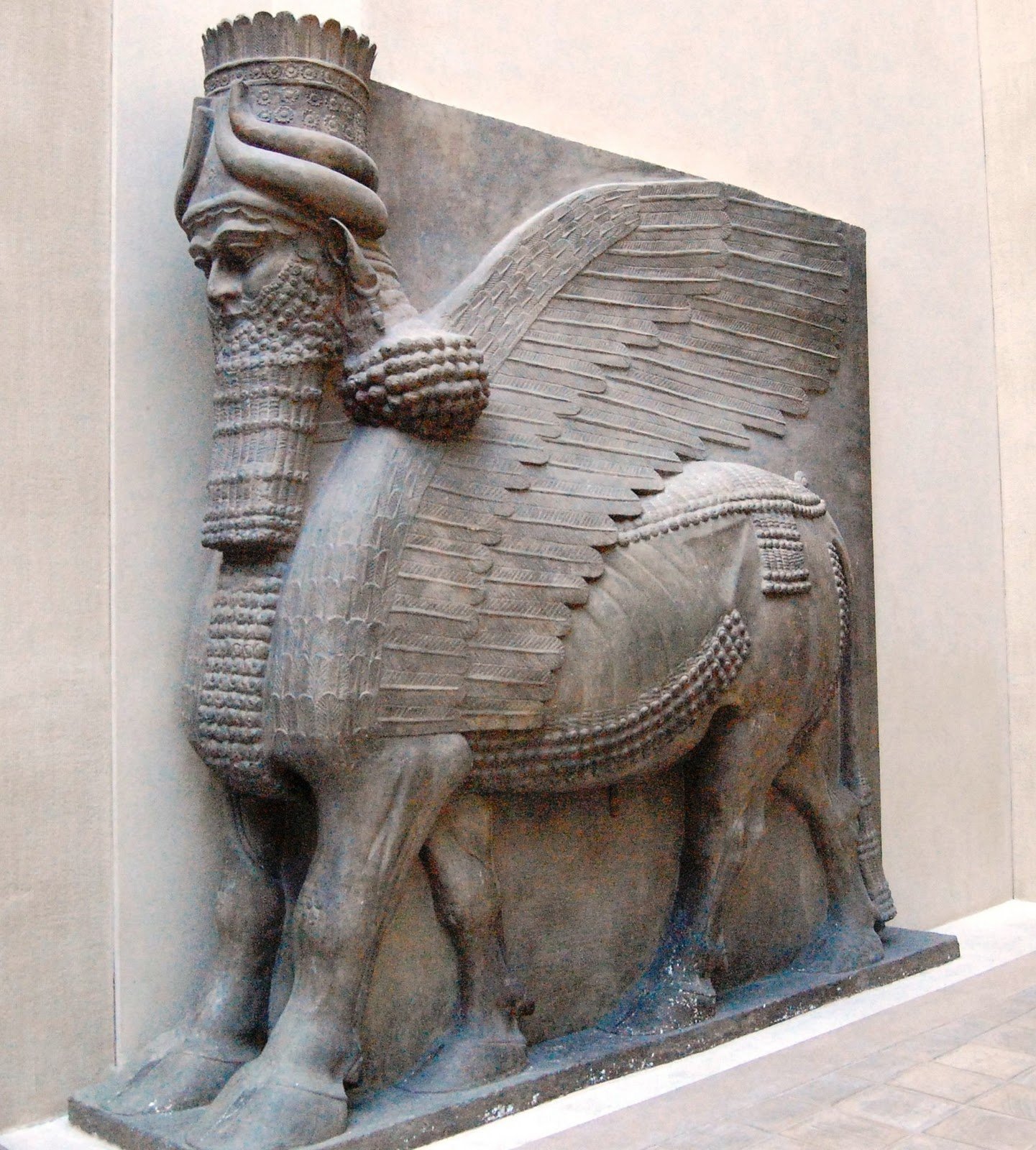
Let us begin with concepts that seem obvious at first glance. The only thing we consider “proof of divinity” is imagery: statues of bearded and crowned figures, images with the Sun depicted above the head, and winged figures. But are these really gods, or are they visual expressions of royal power?
Imagine that, in ancient times, a sculptor or artist receives a commission to create an image of a ruler. The task is as follows: the ruler must appear powerful and wise, and must be depicted as possessing the ability to reach from one end of the empire to the other in an instant.
What does the artist do? The ruler is depicted with the body of a lion, because the lion is one of the strongest animals in nature and a symbol of power. Wings are then added to the image as an indication of speed. A solar disk is placed above the ruler’s head.
But is this a god?
No.
It is a metaphor for qualities—a way of expressing certain characteristics through images.
Yet an archaeologist, looking through a Western lens, cries out:
“THIS IS A GOD!”
He does not see the language of symbols. He sees his own tradition.
This is precisely what I call reversive distortion.
Reversive distortion is the imposition of modern cultural assumptions onto the original meaning embedded in a text or image, resulting in a change to its original content. In this process, an image or text is perceived not as a tool, but as an object of worship.
The instruction of the past becomes an angel, and the law becomes a god. The law is perceived as a sacred being.
1. A Modern Example: The Constitution
Let us look at the modern world: the Constitution.
Sometimes we even call it “sacred.” Its implementation brings prosperity, while its violation leads to chaos.
Imagine that archaeologists in the future, 4,000 years from now, discover our records. They arrive at the following conclusion:
“These people worshipped a god called the Constitution.”
Is the Constitution really a god whose components consist of articles resembling angels?
No.
This is reversive distortion.
2. The Statue of Idrimi
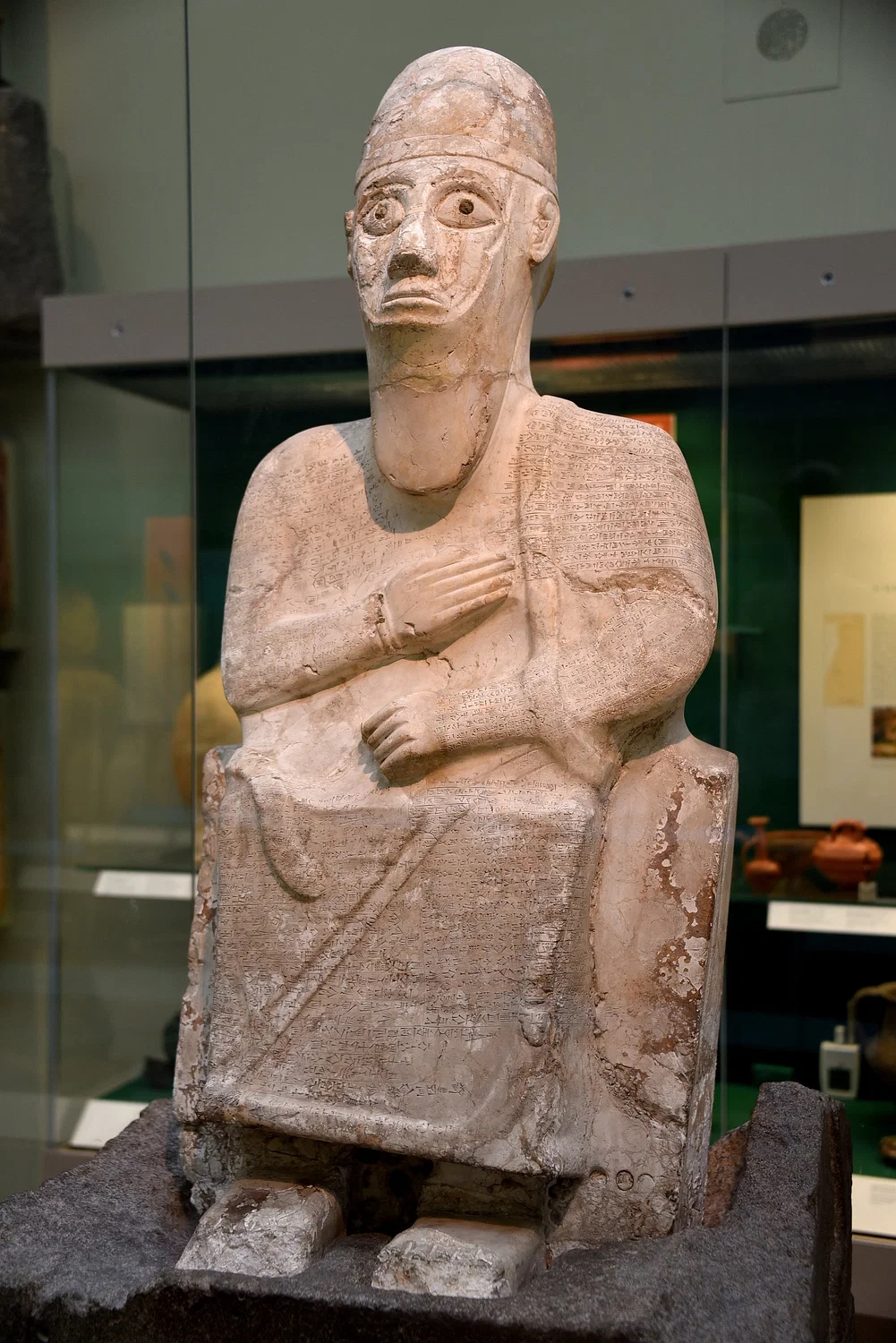
The image depicts the statue of Idrimi, the ruler of Aleppo who lived in the 15th century BCE. Idrimi lived for approximately 60 years.
After fleeing Aleppo, he established his authority in the city of Alalakh, located along the Middle Euphrates. He ruled the city as a local ruler, maintained control over the territory, and strengthened his authority through political and military measures.
The statue is currently exhibited at the British Museum.
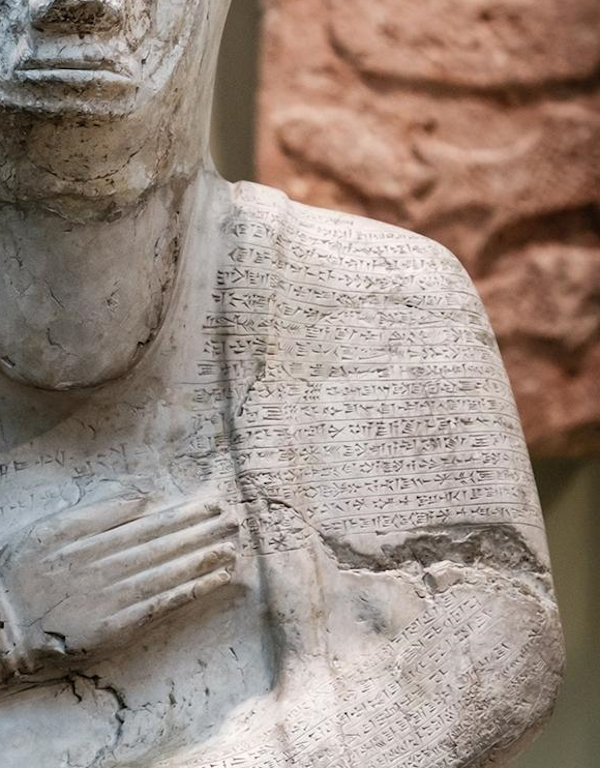
A chronicle about Idrimi is inscribed on various parts of the statue. Here is an excerpt from the text:
⸢a-na-ku⸣ mid-ri-mi DUMU mDINGIR-i-li₃-ma
ARAD ⸢d⸣IM dhe₂-bat u₃ diš₈-tar₂ NIN urua-la-la-ah NIN-ia
Investigating the Meaning of the Name Ilimi-ilima (DINGIR-i-li-ma)
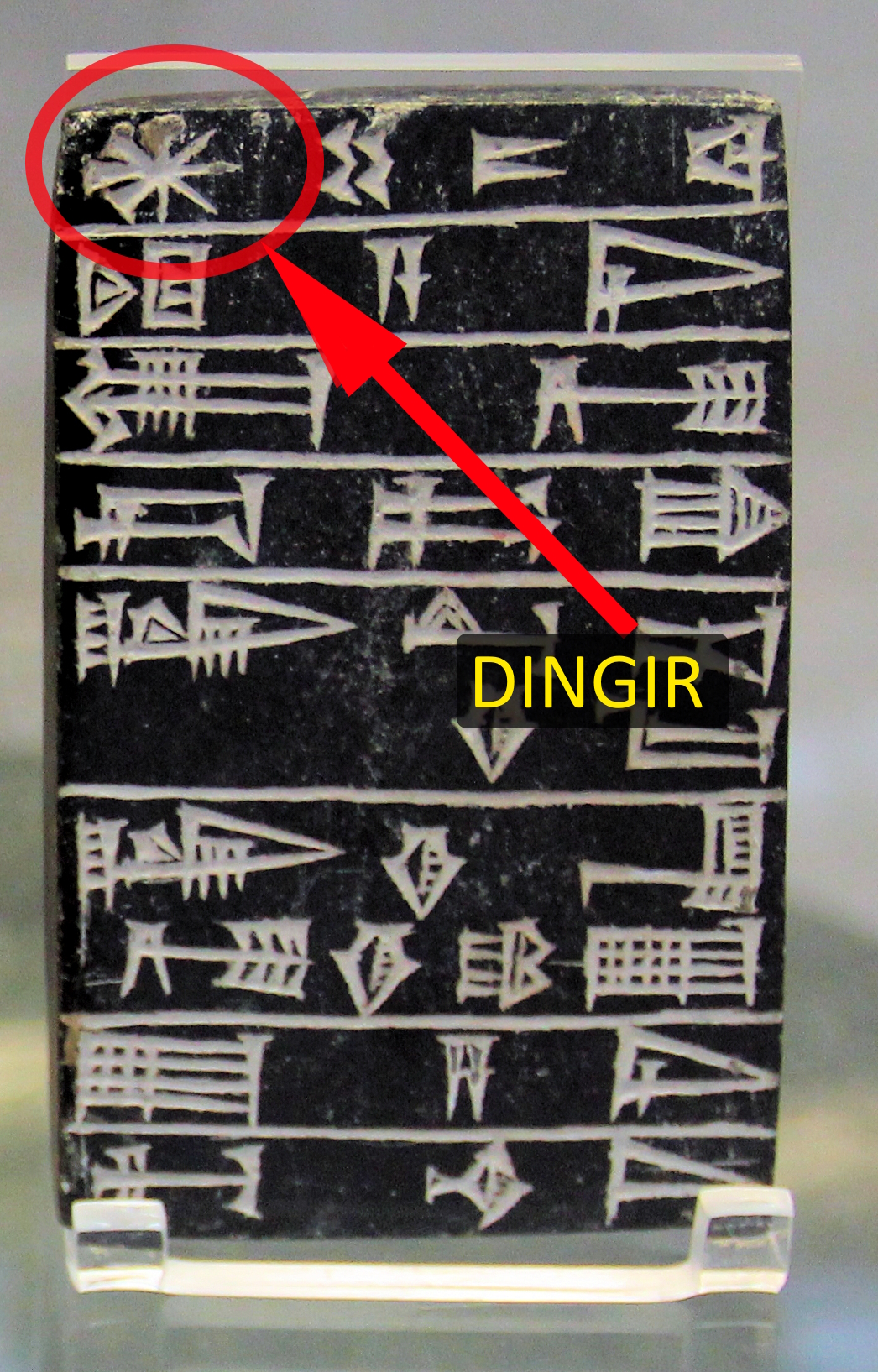
The term DINGIR is traditionally translated in Sumerian texts as “god” or “deity.” However, linguistic, semantic, and phonetic analysis shows that this interpretation is incorrect.
According to my analysis, this term is not associated with the concept of a god. On the contrary, all the indicators suggest that it carries a meaning associated with law, rights, and a normative system.
The Components of the Term DINGIR
DIN — In Akkadian, it expresses the meanings of court, law, and order.
For example:
dīn ilī — supreme court;
dīn ilī u dīn šarri — the court of the god and the court of the king.
According to my interpretation, these expressions actually represent different aspects of the same legal system.
GIR — a phonetic-semantic component. Its traces can also be found in regional languages.
In Azerbaijani:
- pul-gir — someone attached to money, greedy;
- dünya-gir — someone attached to the world, worldly;
- cib-gir — one who enters a pocket, a thief.
In Persian, the suffix -gir creates a similar semantic structure. For example, dastgir — one who holds, one who apprehends.
Conclusion:
DINGIR = DIN + GIR
According to my analysis, this combination may express the meaning of an object associated with law, incorporated into order, or connected to a legal system.
Semantic Conclusion
Thus, DINGIR does not mean “deity” at all. The term may be used for the following concepts:
- The legal system itself.
- A person representing the law.
- An anthropomorphic image of a normative code.
- A symbol expressing the origin or foundation of law.
The Demolition of the Myth of Divinity
The interpretation of DINGIR as “deity”:
- Is not connected with the concepts of “Creator” or “supreme being.”
- Does not belong to the divine category in an ontological sense.
- Is used in legal and political contexts in texts.
In my opinion, the traditional translation of DINGIR as “deity” is a misconception built upon translation conventions and religious bias.
In reality, the term expresses a structure associated with law, rights, and order.
There is no religious mysticism here. No divinity. Just a system, just law.
And this is the key to the entire Sumerian civilization.
Another Interpretation of the Name Ilimi-ilima
Phonetically, i-li resembles the root of the Arabic word ʿilm (علم). However, it is considered to be in the imperative form here. In this case, the word may express the following meanings:
- “Learn!”
- “Know!”
- “Get educated!”
- “Learned,” “knowledgeable,” “educated.”
The component -ma, in turn, is usually explained as a suffix indicating an ending or affiliation.
As a result, the name Ilimi-ilima is interpreted as follows:
- “Principle: learn!”
- “One belonging to the order of knowledge.”
- “The architecture of knowledge—as a foundation.”
Context
When Idrimi says, “I am the son of Ilimi-ilima,” this expression does not necessarily mean “I am the son of a god.”
It can also be interpreted as:
“I am one who is connected with the principle of learning.”
Or:
“I am the product of a system built upon knowledge.”
Analysis of Astronomical Reports in a Neo-Assyrian Clay Tablet
1. Introduction to the Context
We have ancient astronomers’ observational records written in Neo-Assyrian cuneiform.
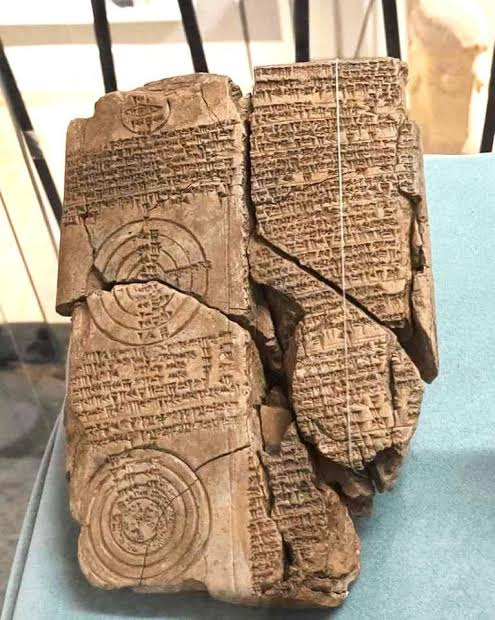
This is not merely a collection of words. These are actual observational data gathered to understand the surrounding world.
Let us examine together how these valuable observations were recorded.
2. Analysis of the Main Lines
GE₆ 4 4 ŠEG₃ ŠUR 6 AN.BAR₇ šamaš₂ TUR₃ NIGIN₂
“On the 4th night, it rained. At midday on the 6th day, the Sun was surrounded by a halo.”
Here, šamaš₂ should be understood not as the name of a sacred god, but as an astronomical object—the sunlight.
A halo forming around the Sun indicates a change in weather conditions and is significant for observations related to rising river levels.
ana KUR TAR-is 7 sin TUR₃ NIGIN₂ ILLU GIN-kam₂
“The river flooded in the east. On the 7th day, the Moon was surrounded by a halo. The river level rose.”
The Moon (sin), in addition to being a source of light at night, also plays an important role in the hydrological cycle.
A halo forming around the Moon can be accepted as a natural sign indicating that the river level may change in the near future.
GE₆ 12 ŠU₂-up 12 13 14 ŠU₂ 14 DINGIR KI DINGIR IGI
“The 12th night was cloudy. The 12th, 13th, and 14th days were also cloudy. On the 14th day, one dingir saw another dingir.”
As we can see, the word DINGIR is understood here not as “god,” but as a term indicating celestial bodies and the apparent proximity of the Sun and Moon.
This is an observation of an astronomical event—a conjunction or an approach of celestial bodies.
3. Results of the Analysis
Why did ancient people record river levels? Why were the halos forming around the Sun and Moon so important to them?
Because these observations formed the basis for monitoring natural phenomena and managing water resources and agriculture.
According to my analysis, the word DINGIR was used in these texts to mean “celestial body” or “law of nature.” In other words, the subject here is not mystical gods, but the laws of nature.
Since water resource management and agriculture were vital, the ancient Assyrians carefully observed and recorded weather conditions, light halos, and river levels.
This information was written on clay tablets. These were scientific observations of practical significance, not collections of mythology and legends.
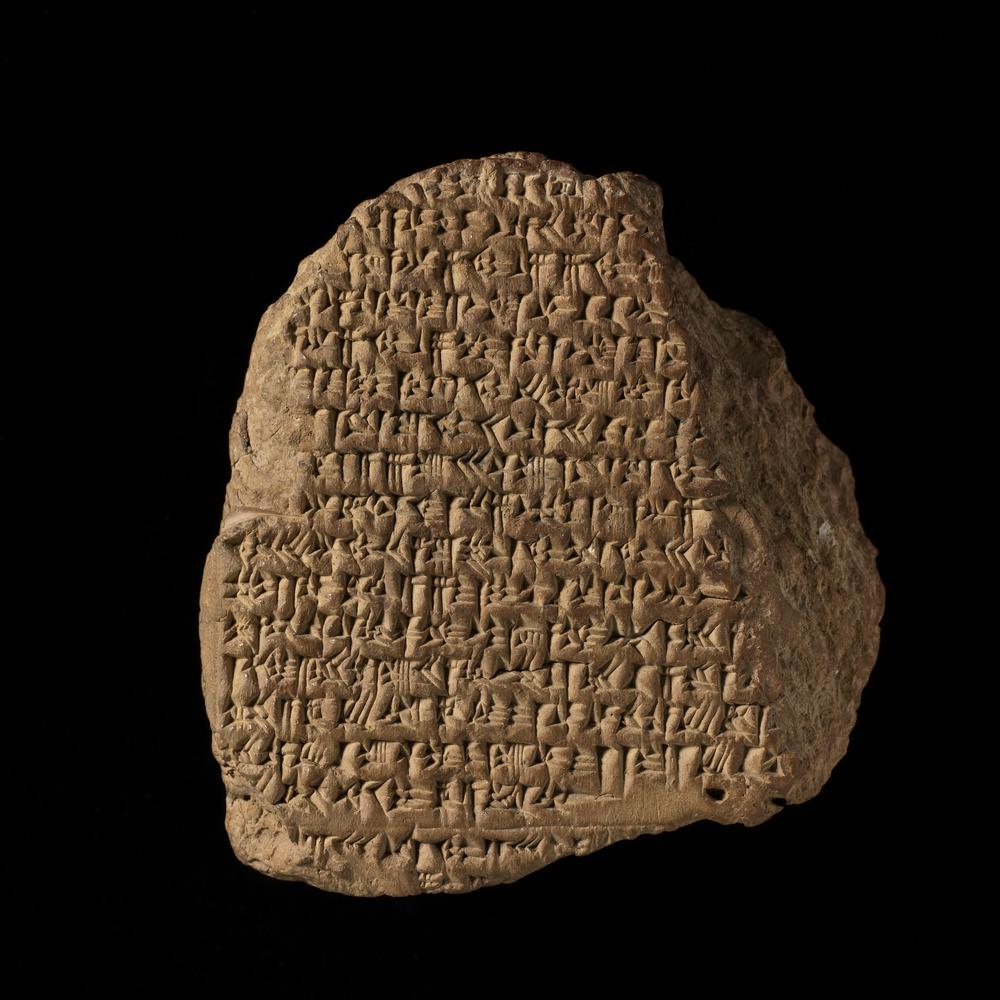
The word Šamaš₂ should also be considered not only as the name of a god, but as a term expressing a natural phenomenon associated with the Sun.
These texts show that behind them stood not merely mythology, but serious logic and precision.
The Word Sīn in Akkadian
In Akkadian, the word Sīn (𒂗𒍪) means “Moon.”
However, like many concepts in ancient Semitic languages, this word can be considered not merely a noun, but also a concept with a verbal root and a functional character.
That is, it is not merely an object, but also a function:
- It does not emit its own light, but reflects light.
- It has a disk-like shape.
- It moves across the sky, meaning it is observed as the carrier of a living and recurring process.
In this sense, the word Sīn expresses movement, manifestation, and a flowing function.
The Moon is not a stationary object, but an observed process.
The Sound Sīn (س) in Arabic
In Arabic, the sound س (sīn) creates an image of fluidity, gliding, and continuous movement.
This feature is reflected in many words:
- sabaḥa (سَبَحَ) — to swim;
- sayyāra (سَيَّارَة) — a moving vehicle, a car;
- sīr (سِير) — to walk, to move forward;
- sayl (سَيْل) — flood, flow.
This sound creates an impression of flow, softness, and flexibility. Phonetically, it also reflects the subtle transition between night and day associated with the Moon.
Preserved Forms of the Word “Sin” in Azerbaijani
In Azerbaijani, the word sin and its derivatives preserve ancient semantic traces.
Sin-i — sini: a round metal serving tray. This form corresponds to the appearance of the Moon as a disk.
Neçə sin-nin var? — “How old are you?”
In this context, sin = year. The expression is a remnant of age-counting based on the lunar calendar. All researchers recognize this context as a remnant of the lunar calendar.
Since a person’s age was formerly measured according to the lunar calendar, the use of sin in the meaning of a year of life can be explained as a natural semantic remnant.
These forms are not accidental. The PaNi method also shows that ancient semantic codes can be preserved within a language itself.
Conclusion: The Sīn Semantic Matrix
Language | Form | Meaning |
Akkadian | Sīn | Moon—a process that reflects light, moves, and appears in a disk-like form |
Arabic | sīn (س) | Fluidity, movement, swimming |
Azerbaijani | sin, sin-i | Circle, metal tray, measurement of age |
In conclusion, Sīn expresses not merely a celestial body, but a meaningful process and the semantic codes of ancient languages.
We will periodically revisit this material as the site continues to grow.
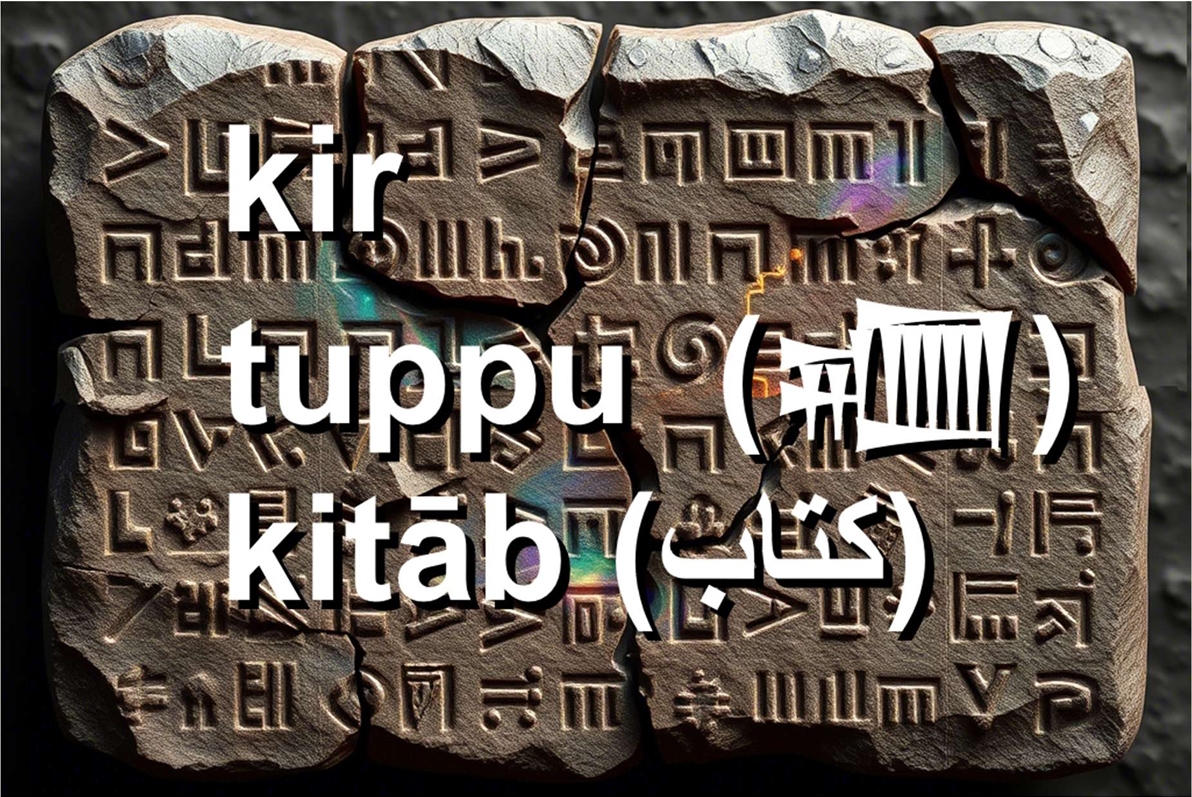
Physics of material and acoustics of the term ki-tab
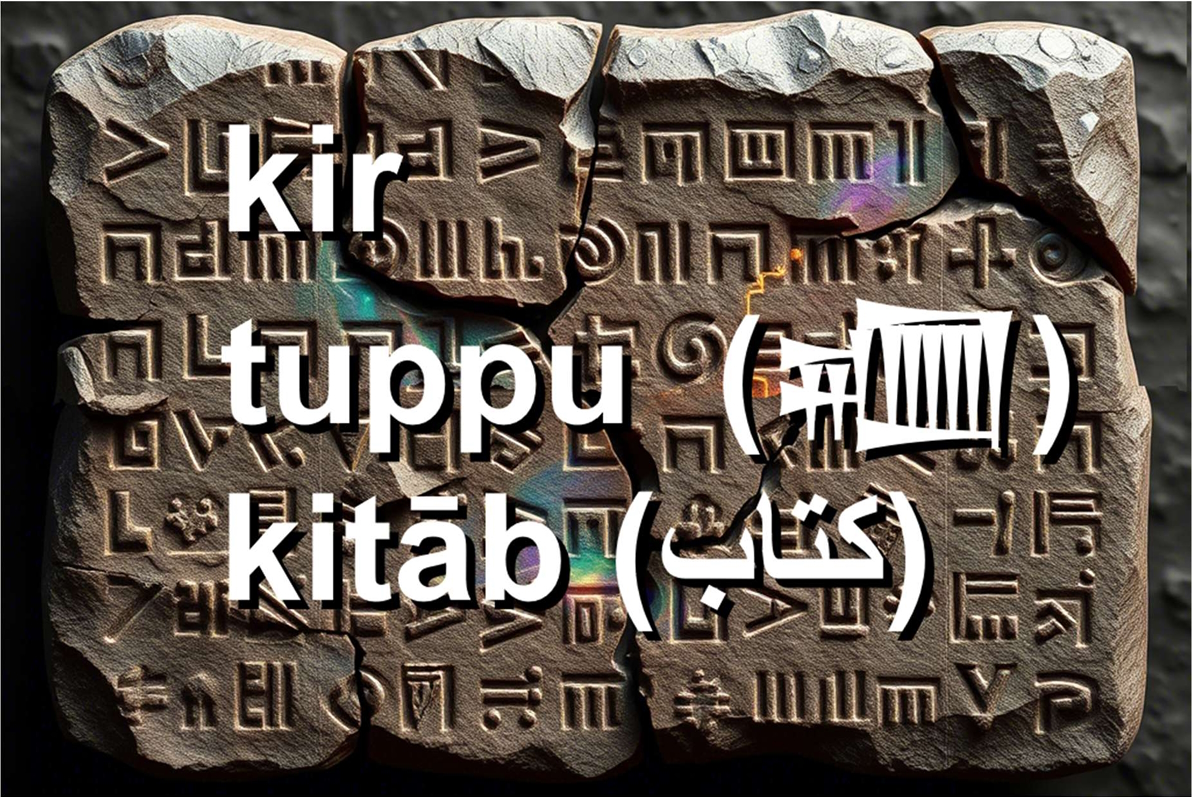
Abstract: This paper presents a deconstruction of the term kitāb through the prism of the physical properties of the carrier and the acoustics of the ancient technological processes of Mesopotamia. We demonstrate that kitāb is not a product of later bookbinding, but a composite engineering structure encoding a solid substrate and a mechanical method of sign impression.
1. Substrate and Process Initiation: The Syllable Ka / Kə
Traditional linguistics derives the word kitāb from the triconsonantal Semitic root k-t-b (to write). However, a systematic analysis of the physics of the material reveals that this term is a composite (a complex engineering structure), the core nucleus of which is the syllable ka / kə.
In the Eurasian and Turkic geolinguistic space, this syllable fundamentally encodes the physics of a solid substrate, dehydration (hardening through drying), impact, or collision with a dense mass:
- Kə-sək (az) — a lump of earth/clay that has dried and hardened during the process of moisture evaporation.
- Kə-rpic (az) — a molded, dense, and dried (or fired) solid building block.
- Kirəmit (az) / Ceramic (en) — fired clay, pottery, transitioned from a soft state to an ultra-solid state.
- Kə-rimə (az) — organic matter (manure) dried to the state of a solid crust/plate.
- Kə-rənti (az) — a scythe; a tool whose function is based on a rigid mechanical collision with a hard medium.
Thus, the initial element ka- / ki- rigidly sets the framework of the physical context: this is work with a solid, molded earthen or clay mass.
2. The Material Carrier: The Component Kir
The second level of the structure is formed by the component kir (Azerbaijani xır/kir). In cognitive semantics, this concept denotes:
- A concrete dense plaque or layer.
- A mud or clay crust.
- A layer formed during the drying of a viscous mass on a surface.
The combination of ka/kə and kir leads us to the concept of a prepared, drying earthen tablet — a material matrix for holding information.
3. Mechanics and Acoustics of the Impression: From Tuppu to Type
The most crucial part of the investigated architecture is the element tab / tuppu.
In ancient Mesopotamia, the primary carrier of information was the clay tablet. In the Akkadian language, it was designated by the grapheme:
𒁾
(Transliteration: tuppu; meaning: "clay tablet", "carrier of signs")
Official philology overlooks the onomatopoeic (sound-imitative) nature of this term. The process of applying cuneiform signs or molding the substrate itself is not a smooth gliding, but a high-speed, rhythmic industrial process.
The scribe of antiquity literally "slapped" and rhythmically drove a rectangular or triangular stylus (qalam) into the drying layer of clay (kir). The physics of this action produced a dull, distinct acoustic sound: "tup — tup — tup".
It was this sound of the physical process that became fixed in the Akkadian tuppu, and then over centuries sprouted in Indo-European languages in the form of concepts associated with impact and pressure:
- Type (en) — type, font, an impression from an impact.
- Tap (en) — to strike, clap, beat a rhythm.
- Typography (en) — typography (literally: "the writing of signs by means of impacts/impressions").
4. Final Synthesis: The Ki-Tab Formula
Combining the physics of the substrate (ka/kə + kir) and the acoustic mechanics of the impression (tuppu / tab), we arrive at the true meaning of the term:
\(\text{Ki-Tab}=\text{Ka/Kir}\ (\text{solid,\ drying\ crust})+\text{Tuppu/Tab}\ (\text{rhythmic\ impact/impression})\)
Laboratory Conclusion:
Ki-Tab is the process and result of applying an informational code by means of mechanical extrusion or impact onto a prepared solid (drying) surface.
Source Code and Initial Graphemes (Muqatta'at)
This deconstruction completely changes the optics of perception regarding the 29 initial letter sequences of the Quran (such as الم Alif-Lām-Mīm, الر Alif-Lām-Rā, etc.) recorded during our corpus data collection phase.
If kitāb is not a bound paper book but a marked solid matrix, the initial graphemes cease to be objects of mysticism. They become technological markers of the source code, which determined:
- The step of the modular grid and layout intervals on the tablet.
- The calibration of the depth and force of the mechanical impact ("tup-step").
- The geometry of tracing lines on the solid substrate.
The research continues. The process of unfolding the architecture of thought is open to co-architectors.
Word n-z-l
N-Z-L: Placement, Positioning, and Putting Things in Their Places
1. The object of study within the framework of the Qur’an
This study focuses on the root N-Z-L (ن ز ل) and how it is used in the Qur’anic text.
The aim is to explore the semantic possibilities of this root by looking at the language itself and the context of the text.
In traditional translations, N-Z-L is usually rendered as “to descend,” “to come down,” or “to send down.” But these are already interpretations, and we need to examine how well they fit the text.
In this study, we consider another semantic possibility: placement, positioning, stopping, and putting things in their places.
To explore this, we will look at Arabic and comparative material from Azerbaijani.
2. What does Arabic show?
In Arabic, the root N-Z-L is not limited to the idea of physical movement from above to below.
The verb nazala (نزل) can also be used to mean stopping, settling in a particular place, or setting up camp.
For example, when an army stops near a village and settles there, the point is that it occupies a particular place and positions itself there. The army does not fall from the sky — it arrives, stops, and takes up its position.
This example shows that in Arabic, the root N-Z-L can express the idea of settling or positioning oneself in a particular place.
So “coming down” is not the root’s only possible meaning.
3. What does the linguistic material show?
When we look at Arabic and Azerbaijani, we observe that the sequences N-Z / N-Z-L appear in words related to order, placement, structure, observation, and control.
In Azerbaijani, we can point to the following examples:
- nizam — order, system, arrangement;
- mənzil — a place to stay, a dwelling;
- nazir — an observer, a supervisor;
- nəzarət — control, supervision;
- nazlanmaq — to act coyly, to show capriciousness, to behave in a particular way;
- naz-nemət — abundance, prosperity, plenty;
- mizan — measure, balance, proportion.
These words are not exclusive to Azerbaijani. Corresponding words and forms also exist in Arabic:
- نظام — niẓām: order, system, arrangement;
- منزل — manzil: a place, dwelling, stopping place;
- ناظر — nāẓir: an observer, supervisor;
- نظر — naẓar: a view, observation;
- ميزان — mīzān: measure, scales, balance.
What we observe here is that the sequences N-Z / N-Z-L appear in words whose meanings relate to order, systems, placement, observation, and control.
There is no need to rule out syllabic or component-based comparisons in advance. In this study, the linguistic material is treated as material for observation, rather than as a set of words that must first be restricted by ready-made rules of traditional etymology.
The key observation is this: the sequence N-Z appears in words related to order, structure, placement, and control.
This raises the question of whether there is a semantic connection between N-Z-L and the idea of placing or putting things in their proper places.
4. Conclusion
The Arabic linguistic material shows that the root N-Z-L can be used in the sense of stopping and settling in a particular place.
The comparative material from Arabic and Azerbaijani shows that the sequences N-Z / N-Z-L are present in words related to order, structure, placement, observation, and control.
Therefore, when studying the use of N-Z-L in the Qur’anic text, its meaning should not be restricted in advance to the translation “to descend” or “to come down.”
Within this study, “placement,” “positioning,” and “putting things in their places” are considered semantic possibilities that need to be examined in the specific contexts of the Qur’an.
In subsequent research, we will present the conclusion we have already reached: there is no basis for automatically understanding the root N-Z-L as “descent.” This conclusion will be discussed separately, with reference to the relevant linguistic and textual material.